
FLEET OPERATIONS
Commercial Golf Cart Fleet Maintenance SOP: Daily Inspection Checklists, Wear-Part Replacement & Winterization Guide
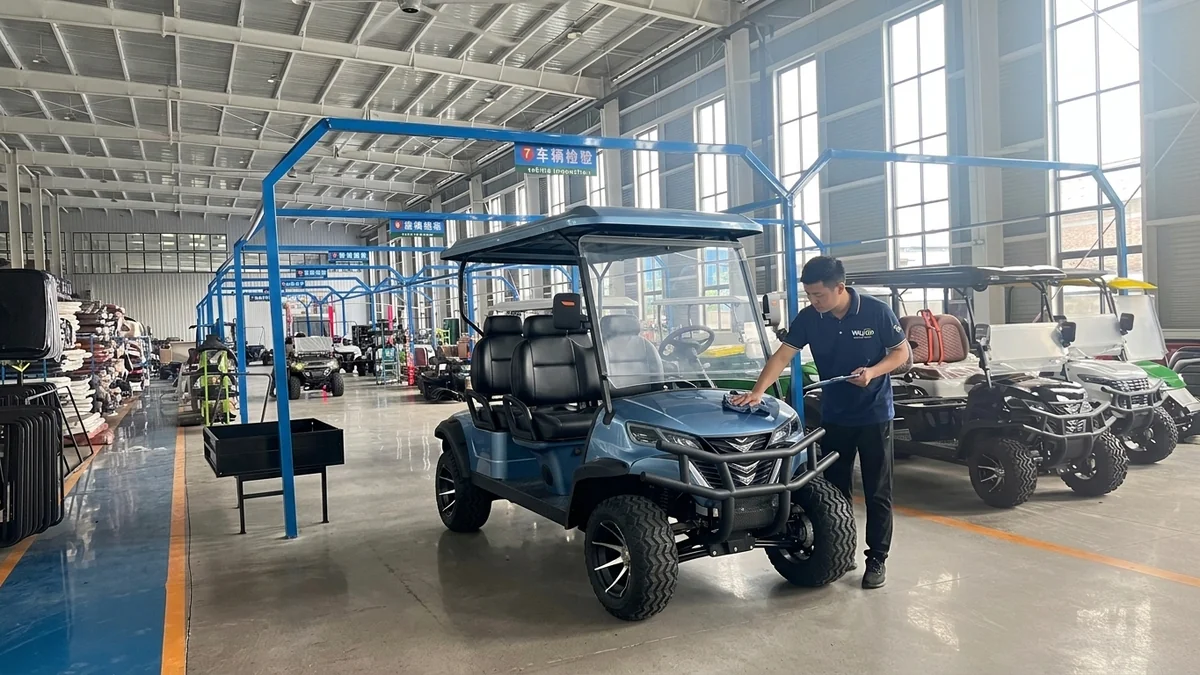
Commercial golf cart fleets in resorts, campuses, and municipal venues endure rigorous multi-shift duty cycles that far exceed the operational demands of personal carts. Without structured preventative maintenance standard operating procedures (SOP), minor mechanical wear quickly escalates into costly transaxle failures, premature tire cupping, and unscheduled passenger service interruptions. Implementing structured inspection rhythms and rigorous seasonal winterization protocols preserves asset longevity and guarantees operational readiness.
The 5-Minute Daily Pre-Trip Inspection SOP (Operator Checklist)
Preventing catastrophic on-shift breakdowns begins with a disciplined 5-minute pre-trip inspection before fleet keys are distributed to resort, security, or groundskeeping personnel. Standardizing this visual sweep identifies loose fasteners, tire air leaks, and electrical anomalies before vehicles enter public service.
- Cold Tire Pressure Verification: Inspect all four tires with a digital gauge. Maintain 20 to 22 PSI (138–152 kPa) to prevent shoulder wear and optimize rolling efficiency.
- Brake & Accelerator Pedal Feel: Verify smooth, non-binding pedal travel. Confirm positive mechanical return and instant electromagnetic brake interlock engagement upon pedal release.
- Battery State of Charge (SoC): Confirm a minimum 80% charge level on the digital cluster before dispatching vehicles to shift duties.
- Safety Lighting Sweep: Test headlamps, turn signal indicators, rear brake lamps, hazard lights, and reverse warning beepers for immediate response.
- Under-Chassis Fluid Check: Inspect garage pavement under transaxle and hydraulic brake master cylinders for signs of gear oil or brake fluid weeping.
Review vehicle chassis dimensions and fleet procurement planning: Commercial Golf Cart Sizing & Dimensions Guide, Multi-Vehicle Fleet Procurement Planning
Structured Periodic Maintenance Schedule: 100-Hour, 250-Hour & 500-Hour Milestones
Commercial duty cycles require scheduled maintenance indexed to operating hours rather than calendar months alone. Implementing structured service intervals ensures critical lubricants are refreshed and alignment tolerances are preserved.
| Service Interval / Operating Hours | Critical Inspection / Service Task | Service Technique & Specification | Fleet Operational Protection |
|---|---|---|---|
| Daily Pre-Trip (Start of Shift) | Tire pressure, safety lights, horn, pedal response | Visual inspection & manual pedal test (20–22 PSI) | Prevents on-shift stranding and operator accident liability |
| 100 Hours (Monthly Routine) | Suspension lubrication & steering toe-in check | NLGI Grade 2 lithium grease injected into zerk fittings; check 1/8-inch toe-in | Eliminates steering wheel wandering and rapid front tire cupping |
| 250 Hours (Quarterly Service) | Brake pad friction depth & hydraulic line check | Measure pad thickness (minimum 2.0 mm friction lining limit) | Prevents rotor scoring damage and hydraulic brake fade on slopes |
| 500 Hours (Bi-Annual Milestone) | Transaxle synthetic gear oil replacement & electrical torque | Drain & refill 80W-90 synthetic transaxle fluid (800 ml); torque lug nuts to 65 ft-lbs | Protects high-torque differential gears against metal fatigue and tooth spalling |
| Annual Service (Pre-Season) | CAN-bus electronic scan & LiFePO4 cell balance audit | Connect diagnostic handset; audit cell voltage variance (ΔV < 0.05V target) | Ensures full lithium pack energy density and catches failing cells early |
Winterization Protocols: Protecting LiFePO4 Lithium Packs in Sub-Zero Weather
For seasonal resorts and northern facilities experiencing freezing temperatures, winterization procedures for modern lithium fleets differ radically from obsolete lead-acid trickle-charging routines.
LiFePO4 lithium chemistry provides remarkable calendar longevity, but charging cold cells below 0°C (32°F) can induce irreversible lithium metal dendrite plating that permanently destroys battery capacity. Waygo lithium modules incorporate onboard CAN-bus Battery Management Systems (BMS) with low-temperature charge cutoffs that automatically halt charging if internal core temperatures drop below freezing.
For seasonal multi-month winter storage: Charge the fleet to 50% to 70% State of Charge (never store completely discharged at 0% or fully saturated at 100%). Disconnect the main battery disconnect switch to eliminate parasitic standby draw from dash displays. Store carts under dry cover, and re-check battery pack voltage every 90 days. Because Waygo lithium cells exhibit self-discharge rates under 1.5% per month, fleets remain completely healthy over 4 to 5 months of winter dormancy.
- Store at optimal 50%–70% SoC: Prevents internal cathode stress during extended storage periods.
- Disconnect master battery breaker: Eliminates micro-amp parasitic drain from onboard controllers and USB ports.
- Raise or rotate tires: Inflate tires to 25 PSI or place vehicles on chassis stands to prevent flat-spotting on cold concrete floors.
Wear Limits and Replacement Criteria: Suspension, Kingpins & Brakes
Fleet mechanics should maintain strict go/no-go gauges for high-wear chassis components: Hydraulic brake pads must be replaced whenever friction material wears down to 2.0 mm (0.08 inches). Brake rotors should be checked for runout exceeding 0.1 mm or scoring grooves.
Front suspension kingpin bushings and tie-rod ends should exhibit zero perceptible lateral play when the front axle is raised off the ground. Replace steering rack bellows and ball joints immediately if rubber protective boots tear, preventing road sand from seizing the steering assembly.
Essential 10-Vehicle Fleet Emergency Spare Parts Kit
To guarantee 99%+ fleet availability during peak tourist or event seasons, commercial operators should stock a standardized emergency spare-parts kit. Recommended container order add-ons include:
- Front & rear brake pad / shoe service sets (4 complete vehicle sets).
- Electronic accelerator pedal potentiometer sensors (2 replacement units).
- Heavy-duty main contactor / solenoid relays (2 units).
- High-output LED headlamp and tail lamp assemblies (1 front set, 1 rear set).
- Pre-mounted wheel and commercial tire assemblies (2 spare units).
- Assorted automotive fuse kits and weather-sealed charging port pigtails.